SuperyachtsAUVEMARE / Story 106
Maritimo M50 Makes a Case for the Enclosed Flybridge
24 October 2026 · 3 min read
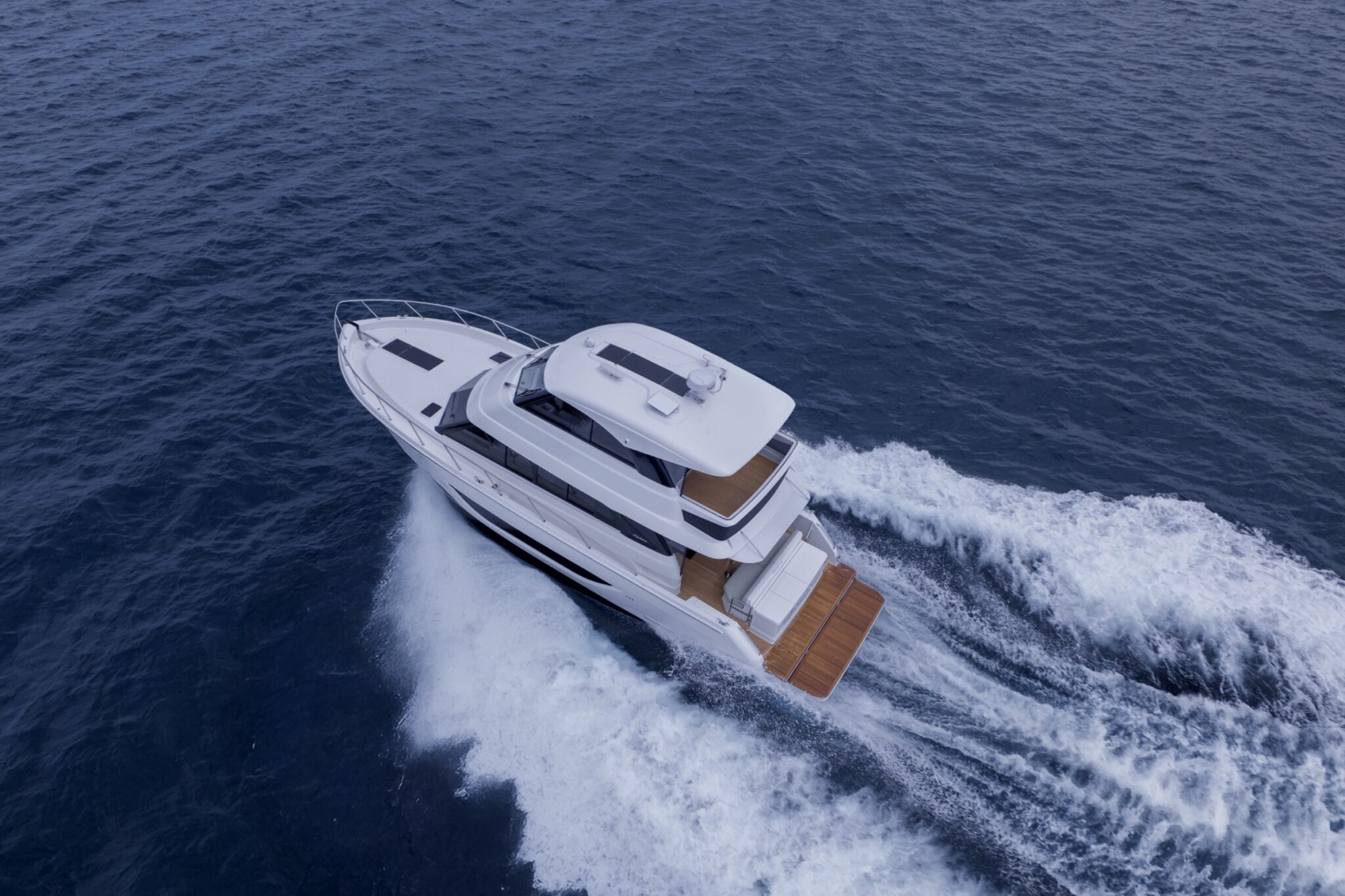
Maritimo original photo. For more, please visit the Maritimo's official website.
Image: Maritimo
A recent independent review brings the Maritimo M50’s practical cruising layout into focus, from its enclosed upper helm to the access and storage that support regular time aboard.
A cruising yacht beyond the first impression
The Maritimo M50 sits at the smaller end of the Australian builder’s enclosed-flybridge range, but its layout makes a substantial commitment to life aboard. Power & Motoryacht’s October review examines the model during a Florida sea trial, highlighting both its protected upper helm and the practical arrangements below. The observations belong to that publication’s reviewer, Chris Dixon.
The tested boat carried twin 800 hp Volvo Penta D13 engines with shaft drives. Maritimo’s published information lists two standard sleeping cabins and additional convertible sleeping spaces. That distinction is useful for owners comparing occasional guest capacity with the privacy of a dedicated cabin.
A second living room above the saloon
The enclosed flybridge is central to the M50’s identity. Maritimo describes the format as both a helm environment and another living area, connected to the main deck by internal stairs. For people who share time on passage, this arrangement can keep the person at the controls within the social life of the boat.
The question for a buyer is how that upper room would be used across an entire trip. It may be where everyone gathers during a cooler morning passage, while the lower saloon remains available for food preparation or quiet time. The benefit depends on seating, visibility and movement between levels, rather than the enclosed label alone.
Dixon’s review also draws attention to machinery access, handholds and storage. Those details offer a useful way to inspect a cruising yacht. Maintenance space should remain reachable after equipment has been installed, and a route that feels easy alongside can feel different when the boat is moving. They are worthwhile subjects for an owner’s walkthrough and survey.
Reading the sea trial carefully
The review reports a trial in wind-driven seas off Fort Lauderdale, with Seakeeper Ride fitted to the test boat. Its handling observations provide context for that installation and those conditions. They do not establish an identical result for every M50 or replace a buyer’s own assessment of a particular vessel.
Ride control under way should also be considered separately from comfort at anchor. An owner who expects substantial time drifting or stationary would need to assess the relevant stabilisation options for that use, rather than assuming one system addresses every situation.
The M50’s proposition is consequently about the whole cruising routine. Sleeping arrangements, protected seating, service access and the relationship between the two living levels deserve to be considered together. Its appeal will be strongest for buyers who value a yacht that remains organised and comfortable between destinations, as well as once the lines are tied.