IntelligenceAUVEMARE / Story 117
PredictWind Adds a Written Briefing to the Weather-Routing Decision
29 October 2026 · 2 min read
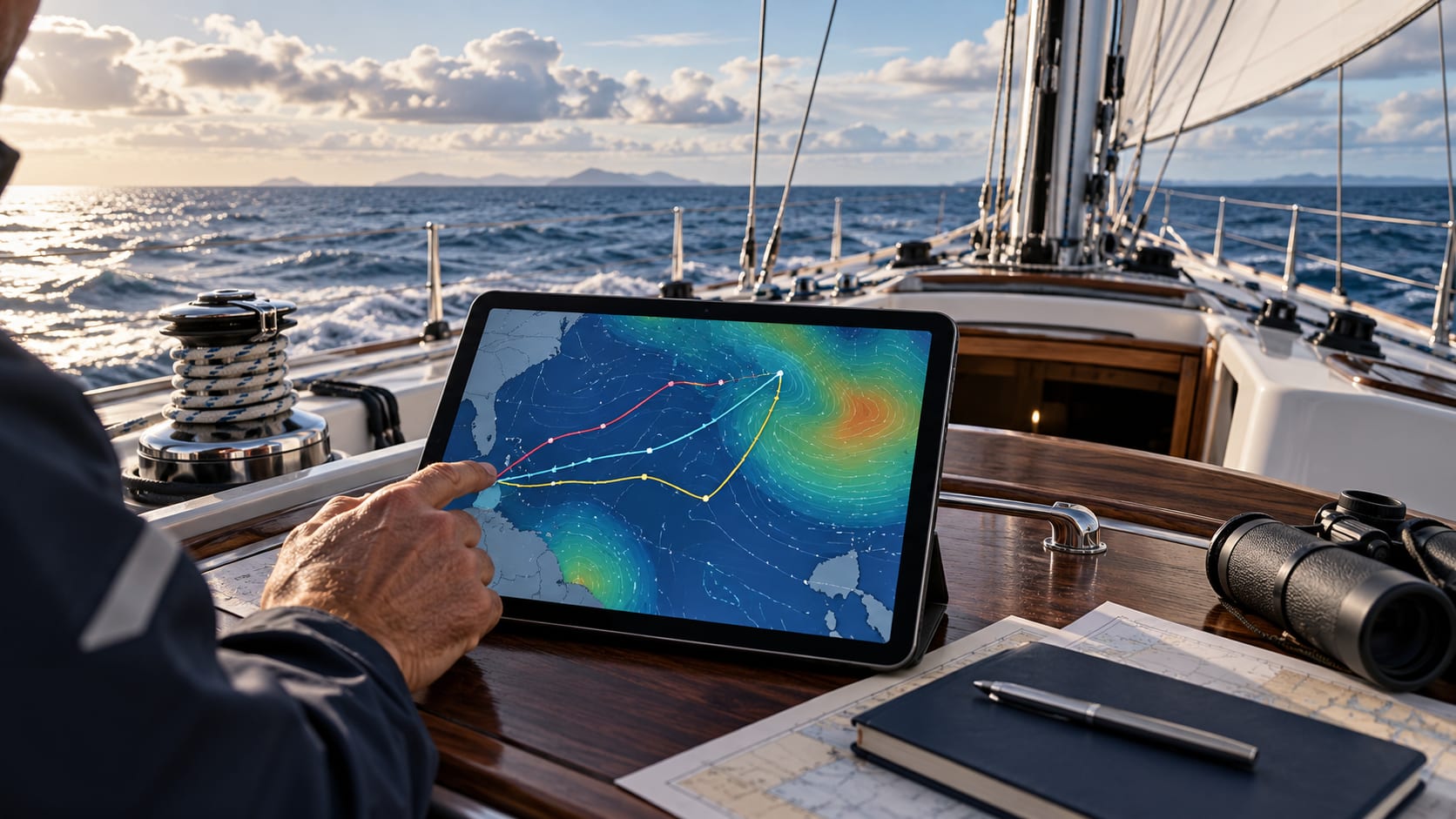
AI-generated editorial illustration of passage planning aboard a sailing yacht. The tablet interface is fictional and does not reproduce PredictWind software or actual navigational guidance.
Image: AUVEMARE / AI-generated editorial illustration. No photographer.
PredictWind’s AI Weather Router turns calculated routes and departure options into an explanatory briefing. The new feature addresses a familiar gap between having detailed information available and helping everyone aboard understand what it means.
Interpretation After the Calculation
PredictWind has introduced AI Weather Router within its Weather Routing and Departure Planning tools. The feature interprets routes already calculated from forecast models, the boat's performance data and user preferences. It does not generate an independent weather forecast.
That sequence is important. The written assessment sits on top of existing routing results, explaining their differences and drawing attention to conditions along a passage. The underlying maps, graphs and tables remain available for examination.
Comparing the Options in Plain Language
According to PredictWind, the feature can compare up to four departure windows and explain whether an option is recommended, needs caution or is unsuitable. Its briefings consider route conditions and highlight declining forecast confidence further into a passage, particularly beyond about five days.
The company reports availability for Standard and Professional subscribers. Additional motion analysis for Professional users addresses factors such as roll and slamming. These are descriptions of the product's announced capability; they are not evidence of independent validation across every vessel or operating condition.
A Shared Understanding Before Leaving
The practical attraction is the possibility of a more informed conversation aboard. A skipper may understand a routing display while a less experienced guest sees only lines and colours. An explanation of when the passage may become uncomfortable can help connect those different perspectives.
Written clarity also makes questions easier to ask. Which part of the journey needs another check? What assumptions went into the boat profile? How would the plan change if the departure slipped? A useful briefing should make that discussion more accessible while leaving room to inspect the inputs and alternatives.
PredictWind presents the feature as support for the skipper's judgement. That is the appropriate frame for assessing it. A readable recommendation can help organise preparation, but the passage still unfolds in changing conditions. The most valuable outcome would be a crew that understands the plan, recognises its uncertainties and knows why it may need to be revisited, rather than a crew that simply remembers which departure received the best score.
Source: Marine Business News