SuperyachtsAUVEMARE / Story 122
Simrad Brings Charted Markers Into the Radar Picture
2 November 2026 · 2 min read
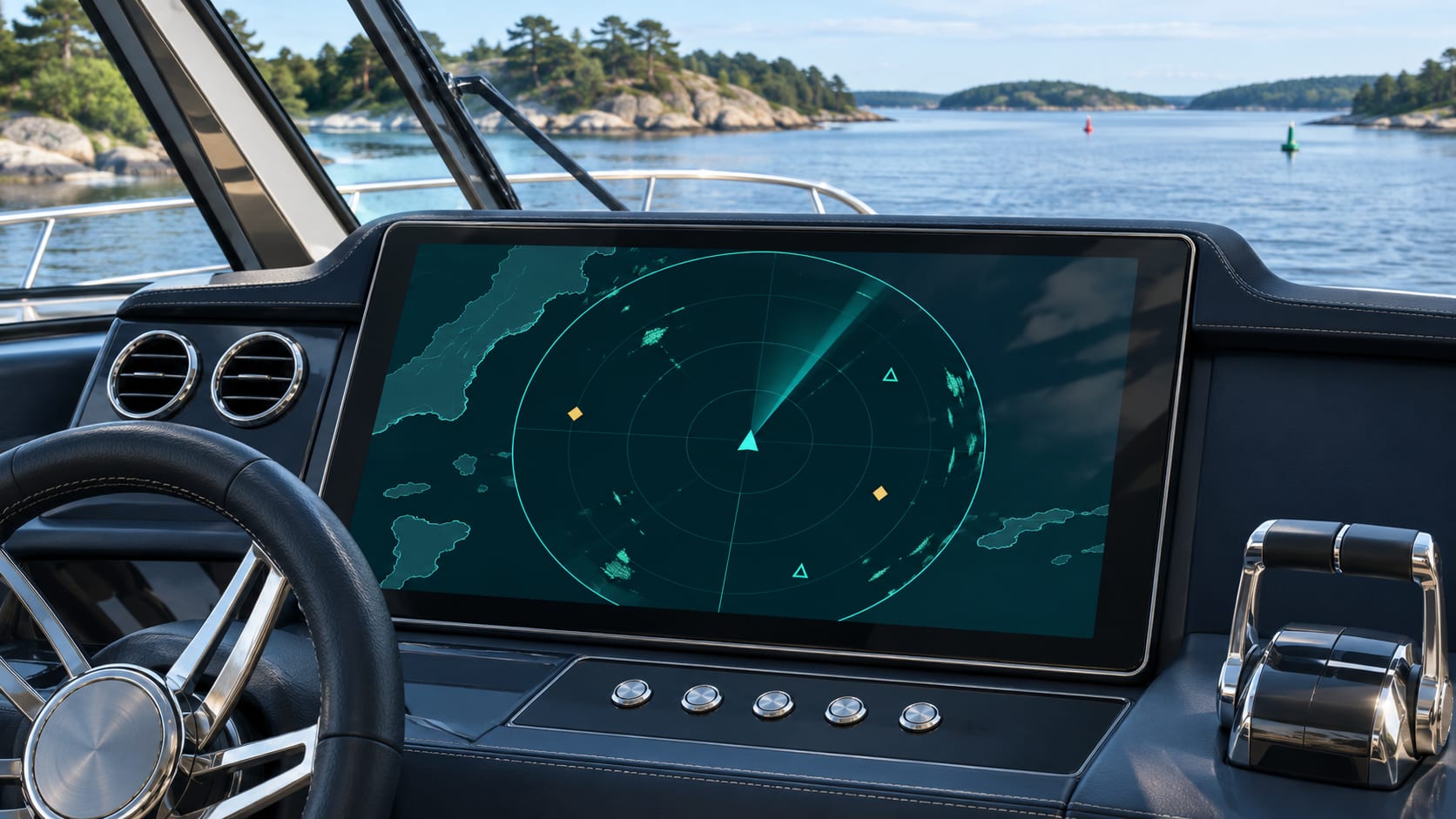
AI-generated editorial illustration of a fictional helm and generic radar-style display. It is not a Simrad or B&G product image, software screenshot or navigational reference.
Image: AUVEMARE / AI-generated editorial illustration. No photographer.
Simrad’s Navigation Aid feature adds chart-derived marker icons to the radar application on compatible systems. The change brings familiar information into a different viewing context, with availability tied to the announced software release and chart requirements.
Another Layer Within the Radar View
Simrad has announced Navigation Aid for its recreational HALO radars and supported B&G systems. The feature places icons for navigation aids, including channel and special markers, inside the radar application, helping distinguish charted fixed objects from other targets.
The marker information comes from compatible C-MAP charts. It is an additional interpretation layer, rather than a claim that the radar independently identifies the type of every buoy it detects. That distinction is central to understanding what the feature contributes.
Compatibility Is Part of the Announcement
The published release connects availability to NEON OS 2.6, scheduled for the fourth quarter of 2026. Listed Simrad displays are NSX, NSX ULTRAWIDE, NSS 4 and NSO 4; the B&G list includes Zeus S, Zeus S ULTRAWIDE, Zeus SR and Zeus SRX. Compatible C-MAP DISCOVER X or REVEAL X charts are required.
Navigation Aid can be switched on or off through the Vessels and Targets menu. Simrad presents the feature alongside AutoTrack, which adds tracked contacts within the radar application. The announcement describes intended functionality, rather than an independently verified safety outcome or confirmation that every installation already has the update.
The Question Is How Quickly the Picture Makes Sense
For an owner, the appeal is an easier relationship between different kinds of information. A radar return, a charted object and the view through the windscreen each contribute something to the picture. Bringing related information together can reduce the need to keep moving between separate displays.
It also makes the design of that combined picture worth examining. Symbols need to remain distinguishable, and the person using the equipment needs to understand which layer supplies each piece of information. A more populated screen is useful only when its meaning stays clear.
The feature therefore deserves attention as a change in presentation as well as a software addition. Its practical relevance will depend on the installed system, the available chart data and the user’s familiarity with the display. The announcement offers a more connected view; the experience at the helm will show how naturally that view becomes part of a familiar routine.
Source: Marine Business News