Electric MarineAUVEMARE / Story 154
Zefiro Puts Dockside Practicality at the Centre of Electric Foiling
21 November 2026 · 2 min read
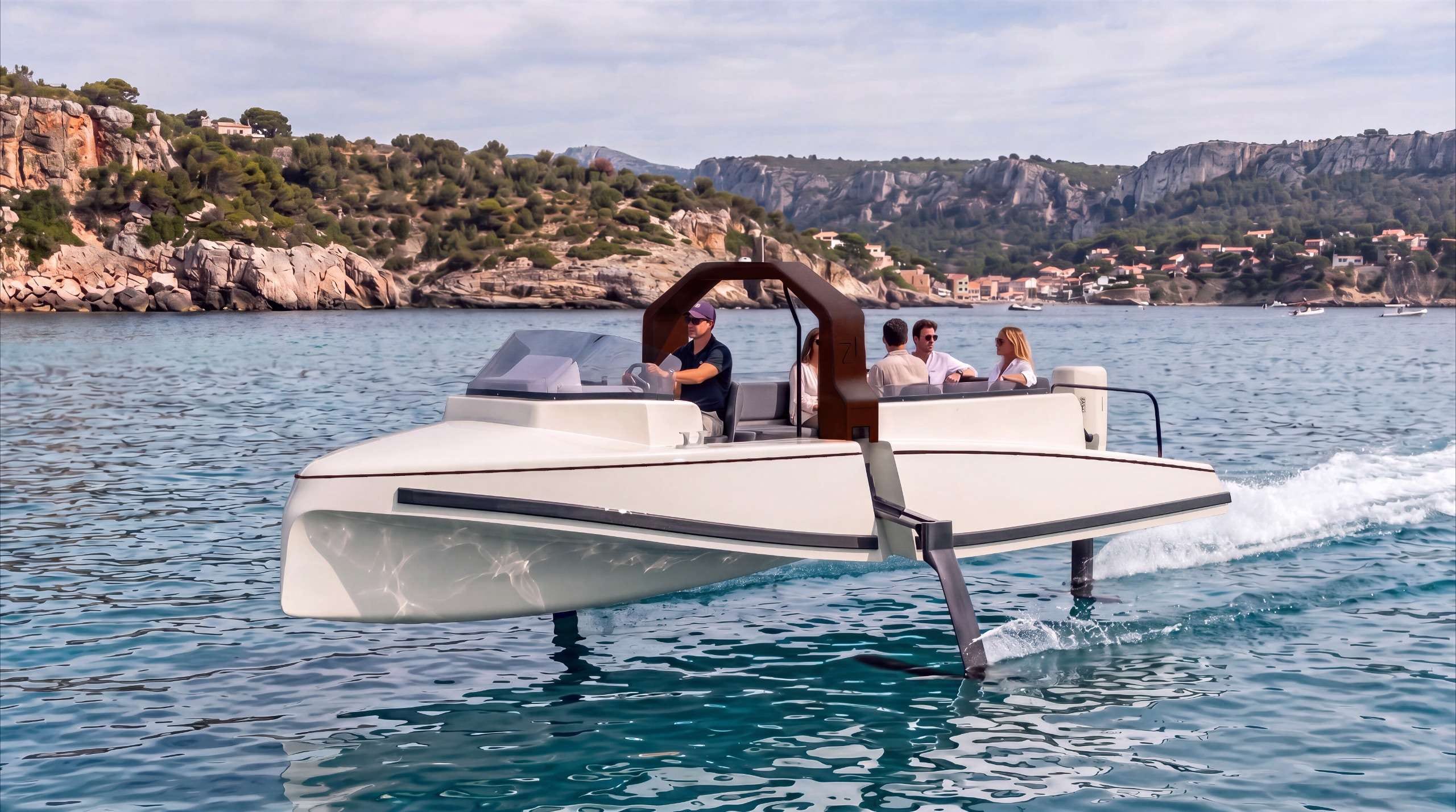
Promotional visual of the Zefiro electric foiling project. This illustration is not evidence of a completed sea trial.
Image: Zefiro / Adidesign, via PressMare
Presented during METSTRADE 2026, Zefiro approaches electric foiling with an everyday operational question: what happens when the boat returns to the dock? The Adidesign project combines a passenger-focused deck with foils designed to retract completely inside the hull profile.
Two operating modes, one passenger platform
Developed by Costanza Brusa, Paolo Portinari and Mario Bonelli, the project is intended to accommodate eight passengers and a skipper. Its proposed applications include yacht tender duties, water taxis and short passenger transfers.
The design allows displacement operation at low speed before transitioning to foil-supported running. The designers place lift-off at around 12 knots. This gives the proposal two distinct operating conditions rather than requiring every part of a journey to be completed on the foils.
The mechanism beneath the deck
Zefiro’s retracting system uses an articulated pantograph arrangement. The designers describe a rotating mechanism without sliding elements, with the working assembly positioned beneath the deck. When retracted, the foils are intended to sit within the hull’s outline.
That packaging is central to the concept. Appendages that project beyond a hull can complicate berthing and close-quarters handling. Bringing them inboard is meant to make the vessel easier to integrate into the places where passenger trips begin and end.
Performance remains a development target
Published feasibility figures include 60 kW of continuous power, a 20-knot cruising speed, a 28-knot maximum and a range exceeding 70 nautical miles. These should be read as project estimates, rather than independently demonstrated sea-trial results. They also should not be assumed to describe the same operating condition.
The next useful evidence will concern the complete operating cycle: passenger loading, the transition onto the foils, energy use and repeated docking. Together, those details will show how the proposed mechanism and propulsion package work as a transport system.
Source: PressMare