SuperyachtsAUVEMARE / Story 070
BoatOn Project Uses 41 River Vessels to Build a Clearer Emissions Picture
12 October 2026 · 2 min read
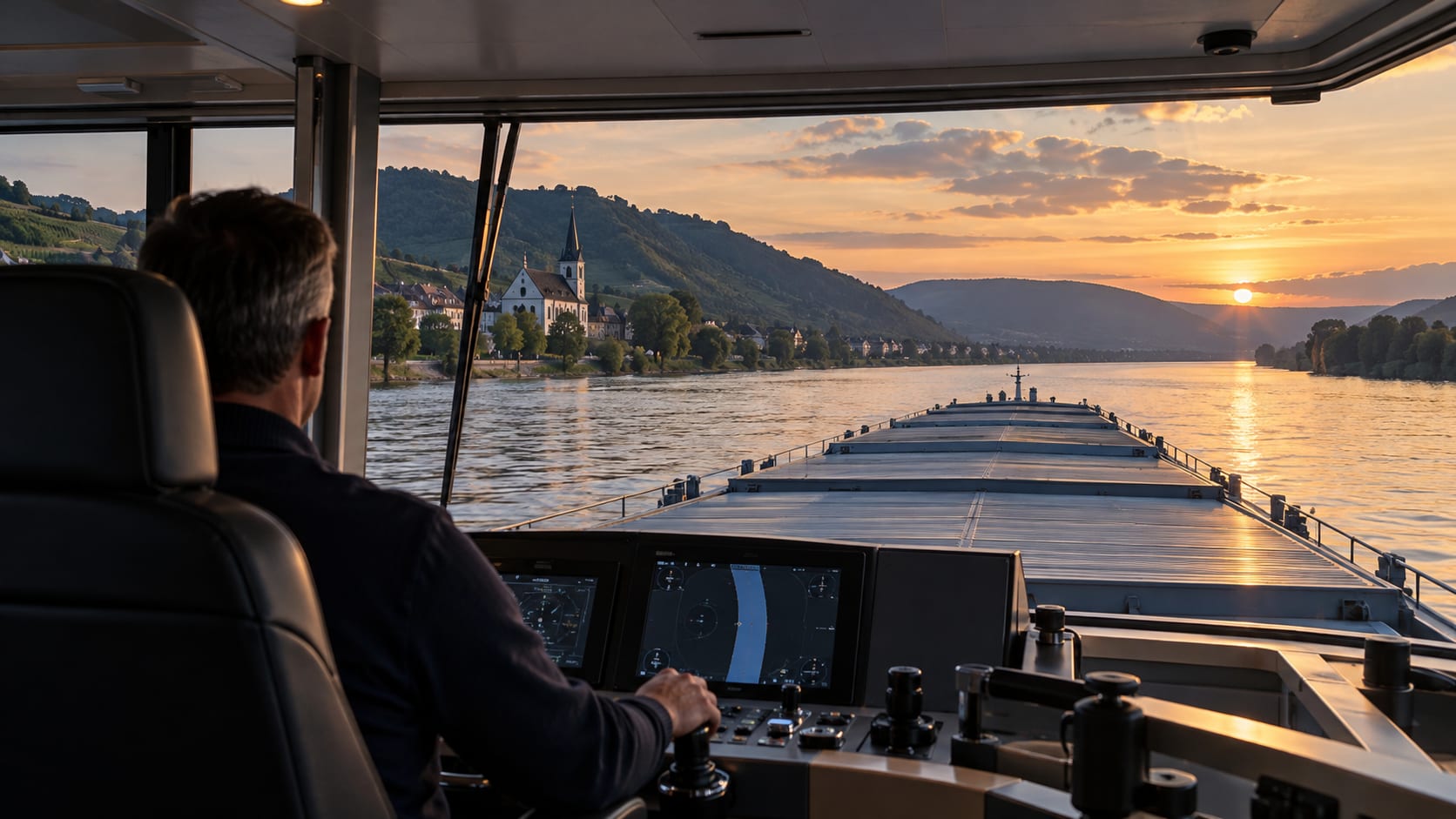
AI-generated illustration of a river vessel viewed from a wheelhouse with a fictional monitoring display. Representative imagery; not one of the 41 project vessels or a BoatOn software screenshot.
Image: AUVEMARE / AI-generated with OpenAI. No photographer.
BoatOn is providing fuel-consumption monitoring for 41 river vessels within France’s ReMoVe programme. The project focuses on understanding existing operations before choosing improvements, using onboard data to inform maintenance, operating decisions and potential future investment. It is a monitoring initiative, not an announced conversion of the fleet to electric propulsion.
Measuring the Fleet Already in Service
The LOG-te initiative, within the ADEME-coordinated ReMoVe programme, will equip participating vessels with connected equipment collecting consumption and navigation data. Each vessel also receives a year’s access to BoatOn Book, which includes maintenance tools, a logbook and carbon-accounting functions.
Atlantic Cluster reported BoatOn’s selection earlier in 2026. BoatIndustry’s October account provides further detail on how the monitoring is intended to work across a fleet with different generations of equipment.
The practical purpose is to connect fuel use with the circumstances of a voyage. A consumption figure on its own says little about which operating decision might improve the next trip.
Bringing Older Equipment Into the Picture
Six older vessels will require dedicated flow meters installed by Ecomer Data, according to BoatIndustry. This allows boats without suitable digital fuel data to participate in the same monitoring effort.
Measured fuel consumption and calculated carbon emissions should remain distinct. Carbon-accounting results depend on the measured inputs and the factors applied to them; the monitoring equipment is not itself proof that emissions have fallen.
No quantified fuel saving for the 41-vessel deployment has been announced in the supplied reporting. The project’s first contribution is therefore a clearer basis for decisions and later comparisons.
Turning Information Into a Working Decision
For an operator, useful monitoring should lead to a question that can be acted upon. Is a change in consumption associated with the operating routine, the condition of the vessel or a difference in the job being performed?
Answering that requires a record that remains understandable over time. A comparison between unlike trips may encourage the wrong conclusion, while a consistent series can help identify something worth investigating.
The same discipline matters when considering new equipment. Before committing to a different propulsion arrangement, an operator needs a credible picture of what the vessel is asked to do. This project can help build that picture, but the next step remains the human task of interpreting it and deciding which improvement is appropriate.
Source: BoatIndustry