IntelligenceAUVEMARE / Story 107
Cape Town’s African Boating Conference Turns Attention to the Work Behind Growth
24 October 2026 · 3 min read
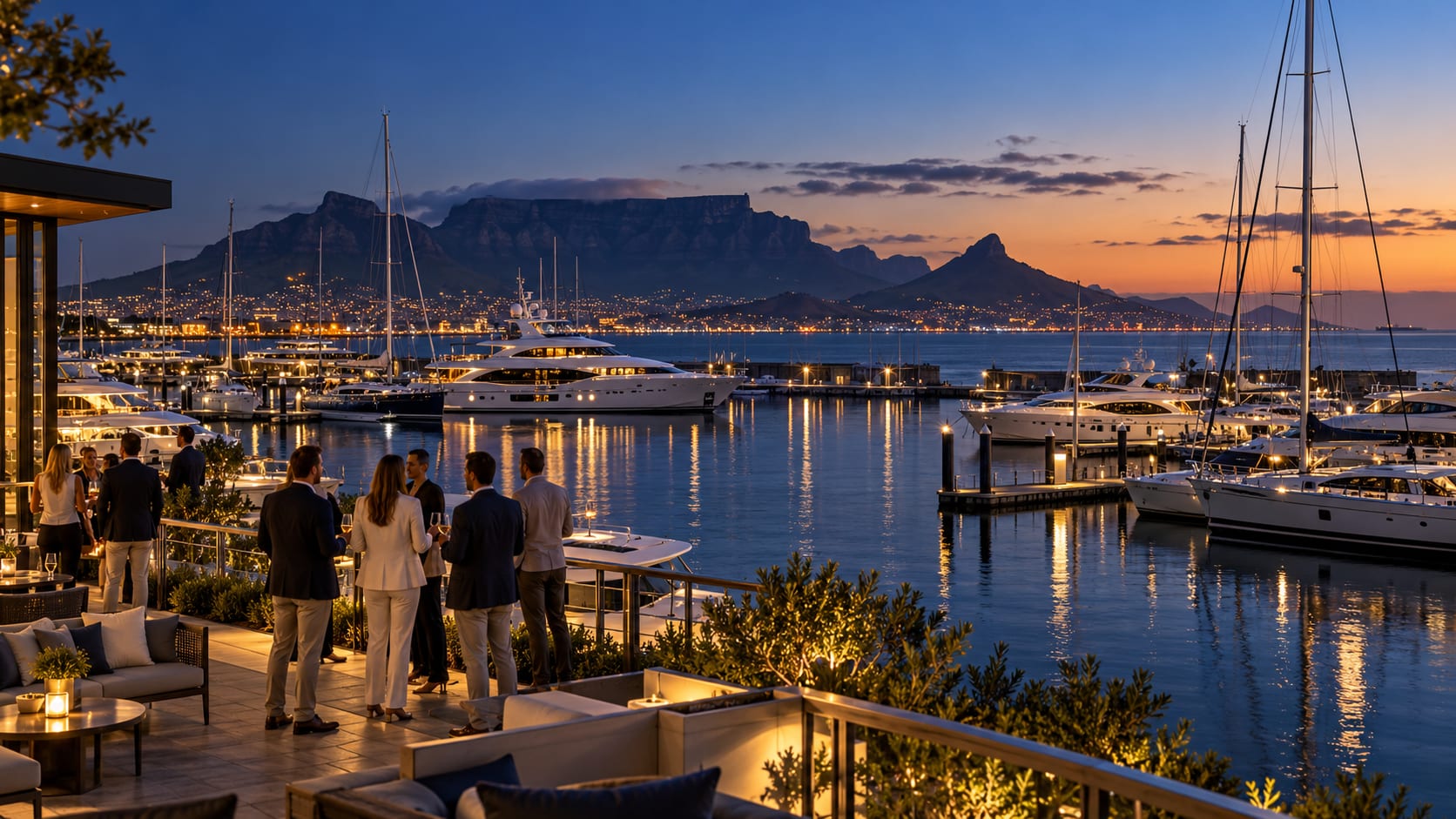
AI-generated illustration inspired by Southern Africa’s marine industry; not a photograph of the African Boating Conference.
Image: AI-generated illustration for AUVEMARE
The 2026 African Boating Conference brought marine businesses and public-sector representatives together in Cape Town, with manufacturing, infrastructure and collaboration central to discussions about the region’s next steps.
A meeting across the marine economy
The African Boating Conference took place in Cape Town on 20–21 October, bringing together boatbuilders, suppliers, superyacht professionals and government representatives. Marine Business News reports more than 232 registrations and 12 exhibitors. Those figures describe the organiser’s reported participation, rather than an independently audited total of individual visitors.
Hosted by Superyacht Cape Town, the event centred on boating’s contribution to economic growth. Its programme covered trade pressures, marine infrastructure, boatbuilding, charter development and superyacht tourism. The combination placed the visitor economy alongside the industrial work required to support it.
Connecting ambition with delivery
International contributors included Gulf Craft’s Erwin Bamps and Oceanco’s Paris Baloumis. Western Cape Premier Alan Winde and Cape Town’s James Vos also participated. The mix of businesses and public representatives is relevant because a marine destination depends on decisions made well beyond any single marina or shipyard.
A visiting yacht needs practical support as well as an appealing coastline. The same applies to a builder seeking customers overseas: introductions can open a conversation, but predictable service and delivery sustain it. The conference’s breadth creates an opportunity to discuss those connections rather than treating tourism, manufacturing and investment as unrelated subjects.
For readers following Southern Africa’s marine industry, the useful question is what continues after the event. A supplier introduction that becomes a dependable service relationship has a different value from a busy exhibition floor. So does a discussion that leads to a clearer understanding between a business and the authorities whose decisions affect its operations.
What makes a conference count
Director Veda Pretorius’s comments emphasised collaboration and the partnerships that may emerge from the meeting. That is an ambition, rather than a quantified record of deals already completed. The published report does not provide a total value of contracts or investment commitments resulting from the two days.
The distinction leaves plenty of room to recognise the event’s role without overstating its outcome. An industry spread across different businesses and specialisms benefits from opportunities to compare problems, identify capabilities and make useful introductions. The lasting contribution would be visible in the work that follows those conversations.
Cape Town’s gathering therefore offers a point from which to follow the region’s development, rather than a final verdict on it. The next evidence worth watching is concrete: partnerships announced, projects advanced and operating obstacles addressed. Those developments would show how effectively the network assembled at the conference translates into opportunities for the people building and supporting the marine economy.