IntelligenceAUVEMARE / Story 092
Soya Group Launches FLOW Maritime to Connect the Economics of Cleaner Shipping
17 October 2026 · 2 min read
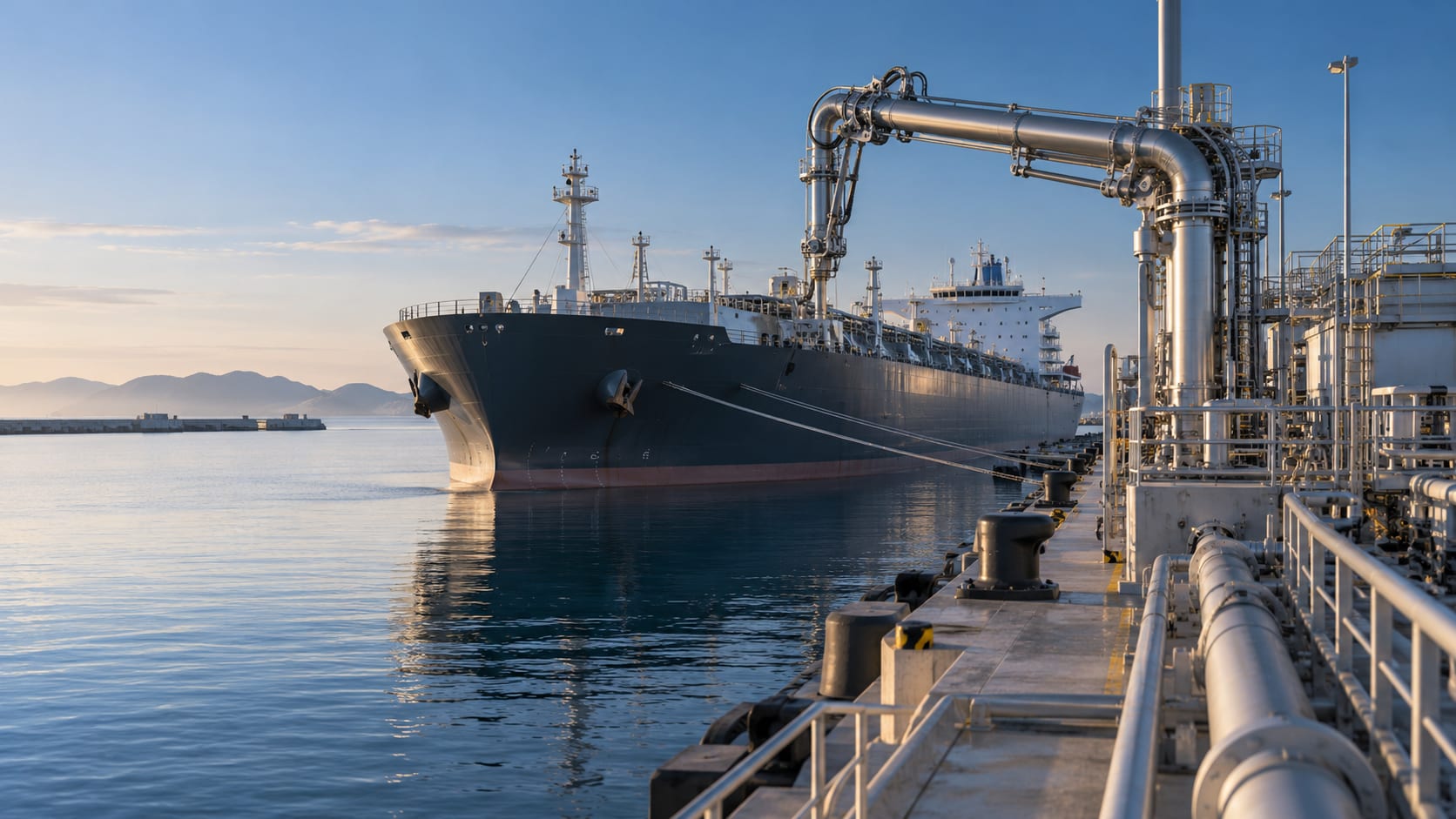
AI-generated editorial illustration of a generic commercial vessel beside port fuel-handling infrastructure. It does not depict a FLOW Maritime vessel, installation or completed project, or identify a particular fuel.
Image: AUVEMARE / AI-generated editorial illustration. No photographer.
Soya Group has launched FLOW Maritime to help shipowners assess the move to alternative marine fuels through a wider commercial lens. The new company brings fuel management, traceability and compliance-related services into one proposition, addressing the links between decisions that can otherwise be considered separately.
A Service Business for the Transition
FLOW Maritime is presented as a marine energy-transition company within Soya Group. Its announced services combine alternative-fuel portfolio management, documented chain of custody, FuelEU pooling and environmental attributes.
Managing director Daniel Gent's central argument is that assessing fuel price alone can leave out other parts of the commercial picture. The company's stated approach is to bring those elements together when supporting customers' lower-carbon operations.
This is an announcement about a service offering. It does not establish a verified saving, a quantified emissions reduction or a result already achieved for a named customer. Those outcomes would require their own evidence and the circumstances behind them.
Making the Evidence Usable
The company identifies transparency, certification and traceability as central to its model. For an owner evaluating a proposal, that places attention on what can be documented as well as what can be supplied.
As an editorial observation, the most useful commercial explanation is one another decision-maker can follow. What is included in the offer? Which assumptions change the comparison? What information will be available afterwards? Asking those questions does not require a buyer to become a specialist in every part of the chain.
It does require the people involved to use consistent boundaries. A headline benefit becomes difficult to evaluate if the fuel, supporting services and environmental claims are discussed on different terms. The value of coordination should be judged through a clear proposal and a record that can be checked.
A Wider Maritime Story for Yacht Readers
FLOW Maritime's announcement concerns shipping more broadly. It should not be read as a dedicated yacht product launch, or as confirmation that the same arrangements will suit every yacht operation.
Its relevance to the ownership conversation is the way it frames a decision. A technically possible change still needs an understandable commercial case, defined responsibilities and a practical route to implementation. Those are questions a yacht owner or manager can recognise even where the vessel, fuel and operating pattern differ.
For now, the launch establishes FLOW Maritime's intended role and the services around which it plans to work. The worthwhile developments to follow are specific examples showing how that approach is applied. Clear information about scope, assumptions and outcomes will make those examples more useful than an unsupported promise of transformation.